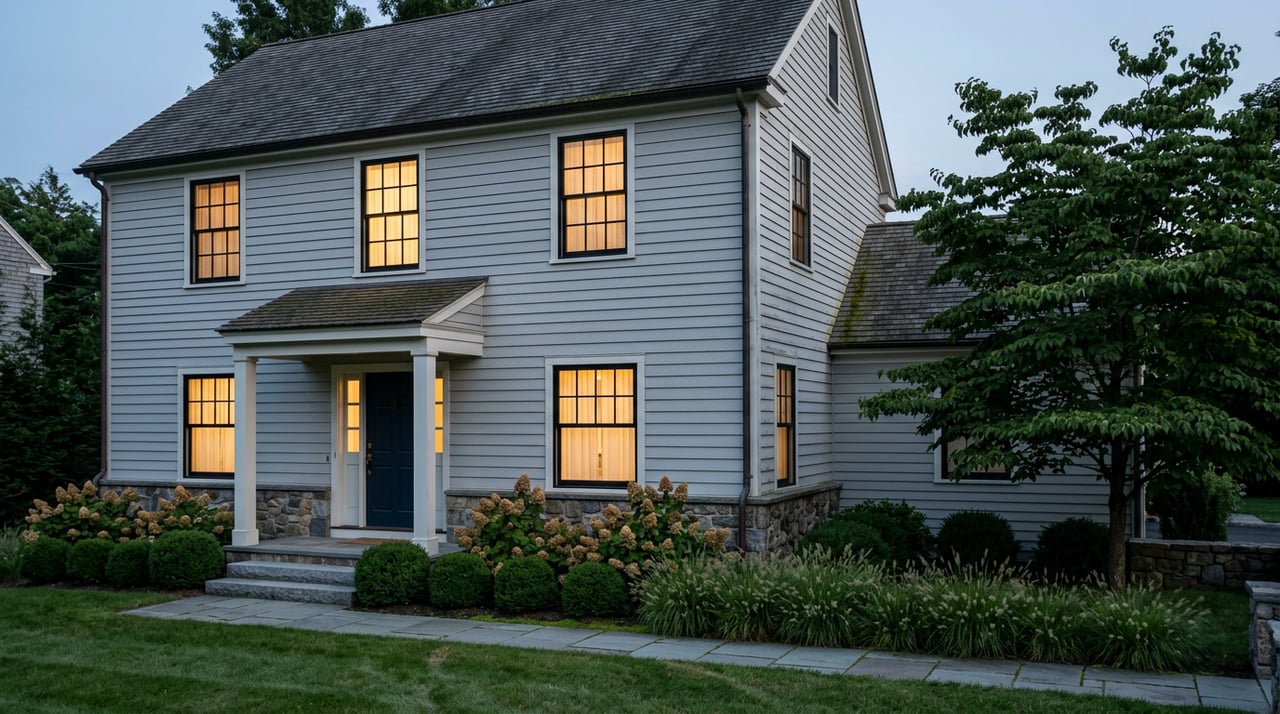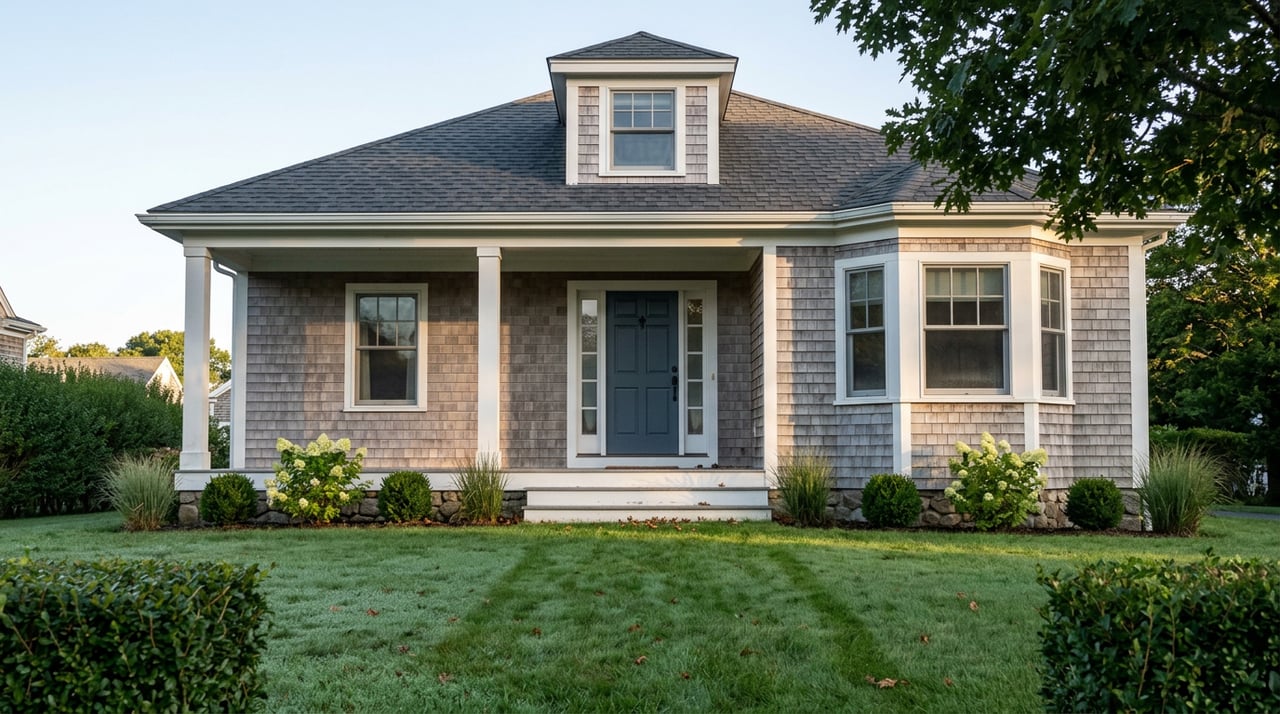
Here is the counterintuitive part of buying an older home in Melrose: the knob-and-tube wiring behind your plaster walls can be perfectly functional, properly maintained, and still be the reason your closing date moves. Home inspectors flag it. Buyers negotiate around it. But the party with actual veto power over your timeline usually isn't the inspector at all. It's the insurance underwriter deciding, days before closing, whether they'll write you a policy at all.
That distinction matters more in Melrose than in most Middlesex County towns, because so much of the housing stock predates the wiring standard insurers now expect as a baseline. Understanding where the friction actually sits, and how to sequence around it, is the difference between a closing that happens on schedule and one that gets pushed while everyone scrambles for a policy.
A City Built Before the Wiring Standard Existed
Melrose's own Historic Preservation page puts a number on something most buyers only sense anecdotally: roughly 40 percent of homes in the city were built before 1900. That is not a scattering of antique outliers. It is a substantial share of the market, concentrated in recognizable pockets: the Queen Anne homes along Grove Street, the Richardsonian Romanesque houses that fill out Melrose Highlands, the early rail-era stock clustered near the Wyoming and Melrose Highlands commuter stations.
Knob and tube wiring was the residential standard from the 1880s through the 1940s. Do the arithmetic on Melrose's build years and you get a city where active K&T isn't a rare surprise buried in a handful of untouched estates. It's a wiring type baked into a meaningful fraction of everything currently for sale, including plenty of homes that have been beautifully renovated everywhere except behind the walls.
The Underwriter, Not the Inspector, Holds the Veto
A home inspector's job is to tell you what's there. A licensed electrician's job is to assess whether it's safe as installed. Neither of those parties decides whether you can get a mortgage-required homeowners policy in time to close.
That decision sits with an underwriter who isn't grading your specific splices and ceramic knobs. They're pricing a category. Knob and tube has no ground wire, so a fault has nowhere safe to go. Its original rubber and cloth insulation dries out and cracks over decades of heat cycling. And it was engineered to shed heat into open air, which means the moment someone blows insulation over it during an efficiency upgrade, a manageable circuit becomes a fire risk. Insurers know all three of these things generically, and they underwrite the category rather than investigating your particular attic.
The practical result: many standard carriers decline to write a policy on a home with active knob and tube, full stop, or they'll only do it after a licensed electrician's inspection report and often with a mandated upgrade timeline attached. If you can't secure a standard policy, Massachusetts has a backstop, but it's worth understanding exactly what that backstop is before you count on it.
| Standard market HO-3 | MPIUA FAIR Plan | |
|---|---|---|
| Who writes it | Private carriers (Arbella, Safety, Travelers, and similar) | State-chartered insurer of last resort, per MPIUA |
| Dwelling coverage cap | Typically matched to full replacement cost | Capped at $1,000,000 |
| Contents settlement | Usually replacement cost | Actual cash value unless separately endorsed, meaning depreciation is subtracted |
| Premium | Standard market pricing | Generally higher, with narrower coverage |
What Landing in the FAIR Plan Actually Costs You
The FAIR Plan exists precisely so no Massachusetts property owner is left with zero options, and it does that job well. What it doesn't do is replace a standard policy on equal terms. If your Melrose Victorian is worth more than a million dollars to rebuild, and plenty in Melrose Highlands are, the FAIR Plan's cap on Coverage A means you're either accepting a coverage gap or layering a separate excess policy on top, adding a step and a cost that a standard market buyer never has to think about. And if you ever file a contents claim, actual cash value means the payout reflects your ten-year-old furniture's depreciated value, not what it costs to replace it today.
None of this means a home with active K&T is uninsurable or unsellable. It means the insurance conversation needs to start earlier than most buyers assume, ideally before an offer is even written, not after the home inspection when the clock to closing is already running.
The Retrofit Trap
The wiring problem doesn't stay contained to the insurance conversation. It follows you into any efficiency upgrade you try to make afterward. Mass Save, the state's energy efficiency program, generally requires a licensed electrician to verify that knob and tube wiring is de-energized or fully removed before insulation and air sealing work can proceed. That's the same underlying hazard insurers worry about: buried, heat-trapping wiring. The program does offer meaningful help, covering up to $7,000 toward K&T removal, but that assistance is limited to income-eligible households, which leaves a lot of market-rate Melrose buyers paying the full rewire cost out of pocket if they want to insulate an older attic or wall cavity properly.
Adding to the math, the federal tax credit that used to offset electrical upgrade costs, the Energy Efficient Home Improvement Credit under Section 25C, expired after December 31, 2025. As of 2026, there's no federal credit available for a panel upgrade or a K&T rewire. Whatever a Melrose buyer budgets for bringing an older home's wiring current, they're budgeting for it without the federal offset that existed the year before.
A Second, Separate Clock: Lead Paint
Wiring isn't the only clock ticking on a pre-1900 Melrose sale. Massachusetts law requires anyone selling a home built before 1978, which covers essentially all of that 40 percent, to provide a formal Property Transfer Lead Paint Notification before a purchase and sale agreement is signed. Buyers get a minimum ten-day window to arrange their own lead inspection or risk assessment, and sellers who skip the notification face state penalties.
This obligation runs on a completely different track than the insurance question. Lead paint disclosure is about paperwork and timing, not underwriting. But for a seller preparing a century-old Melrose home for market, both clocks start at roughly the same moment, and it's worth handling them as two separate checklists rather than assuming one covers the other.
Sequencing a Melrose Purchase or Listing Around This
A few steps, in the order that actually prevents a delayed closing:
- If you're buying, ask your inspector directly whether they saw ceramic knobs, tubes, or two-prong ungrounded outlets, and get a licensed electrician's assessment before your inspection contingency expires, not after.
- Loop in an insurance agent during your due diligence period, not during mortgage commitment week. Ask specifically whether the home's wiring will get you a standard quote or a FAIR Plan referral, and price out what an excess policy would cost if your dwelling value exceeds $1,000,000.
- If you're selling and know your home still has active K&T, get an electrician's written assessment ahead of listing. A documented, permitted partial rewire, even just the highest-load circuits, gives buyers something concrete instead of a question mark that stalls their financing later.
- If a Mass Save upgrade is part of your plan, confirm income eligibility for the $7,000 removal assistance before you budget around it, since it's not universal.
- Handle the lead paint Property Transfer Notification as its own task with its own ten-day clock, separate from anything wiring-related.
A Few Direct Questions
Does every pre-1900 Melrose home still have active knob and tube? No. Many have been partially or fully rewired over the decades, particularly during kitchen and bath renovations. The only way to know is a licensed electrician's inspection, not a guess based on the build year alone.
Can I close on a home before my insurance is bound? Lenders require proof of an active homeowners policy at closing, so no. This is exactly why the insurance conversation needs to start early rather than at the last minute.
Does rewiring guarantee a standard market policy? It significantly improves your odds and often restores standard pricing, but underwriting also weighs panel amperage, prior claims, and other factors, so a full rewire is a strong step rather than an automatic guarantee.
Melrose's older housing stock is a genuine asset. The character, the craftsmanship, and the walkable streets built around the rail lines are exactly why people want to live there. But buying or selling one of these homes well means treating the insurance and wiring question as a distinct, early-stage task rather than something that surfaces as a surprise at the inspection table.
If you're weighing a purchase in Melrose Highlands, near Wyoming Station, or anywhere else in the city's older housing stock, Kristopher Gergler can help you sequence the inspection, the electrician, and the insurance conversation so none of them catches you off guard. Let's Connect.