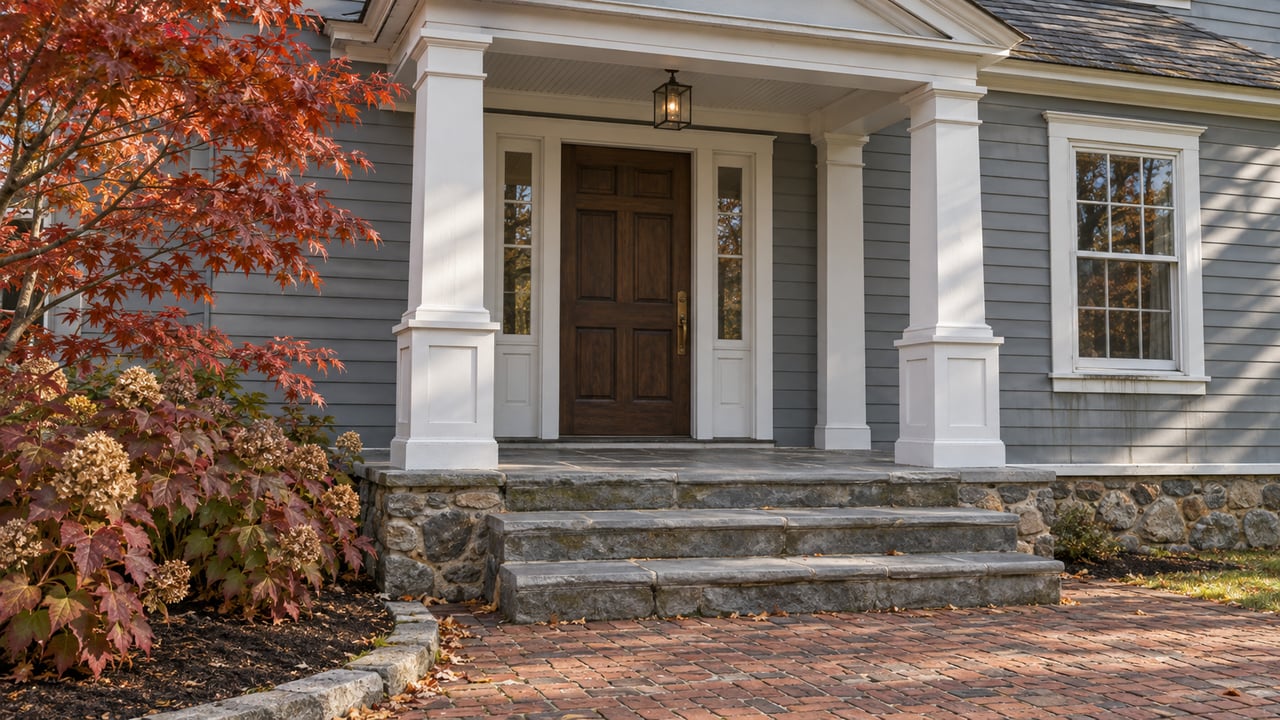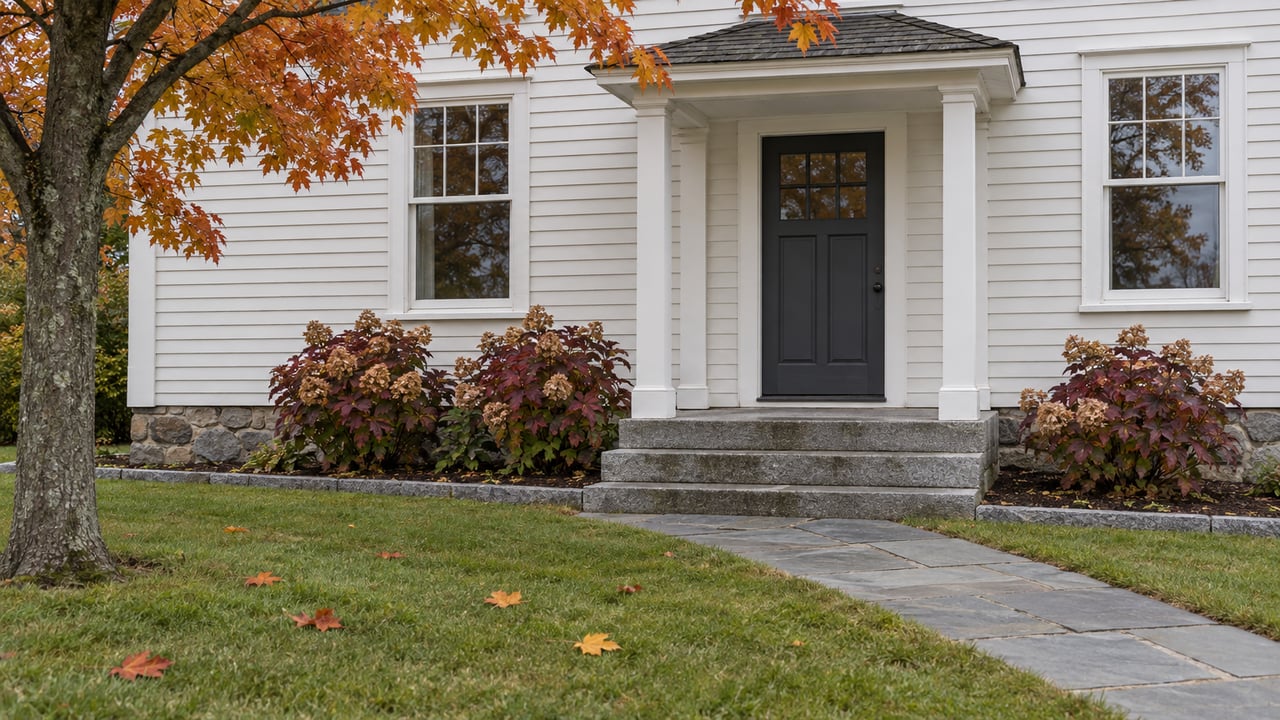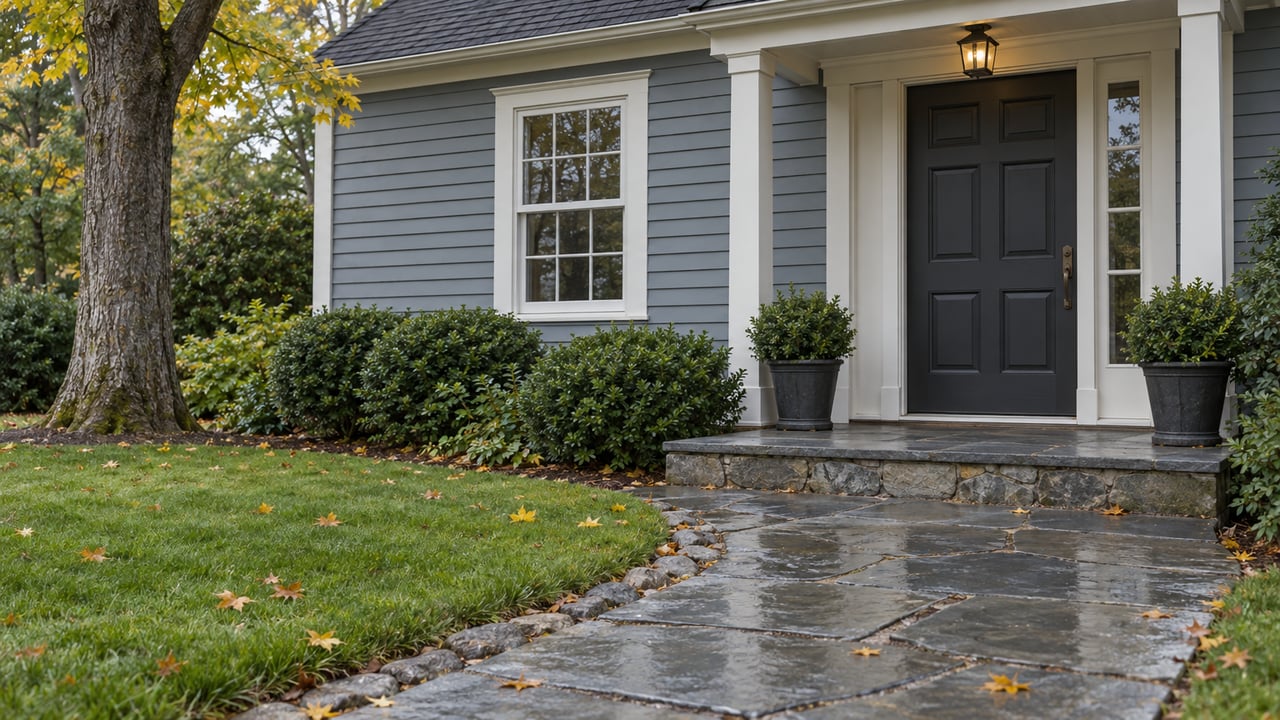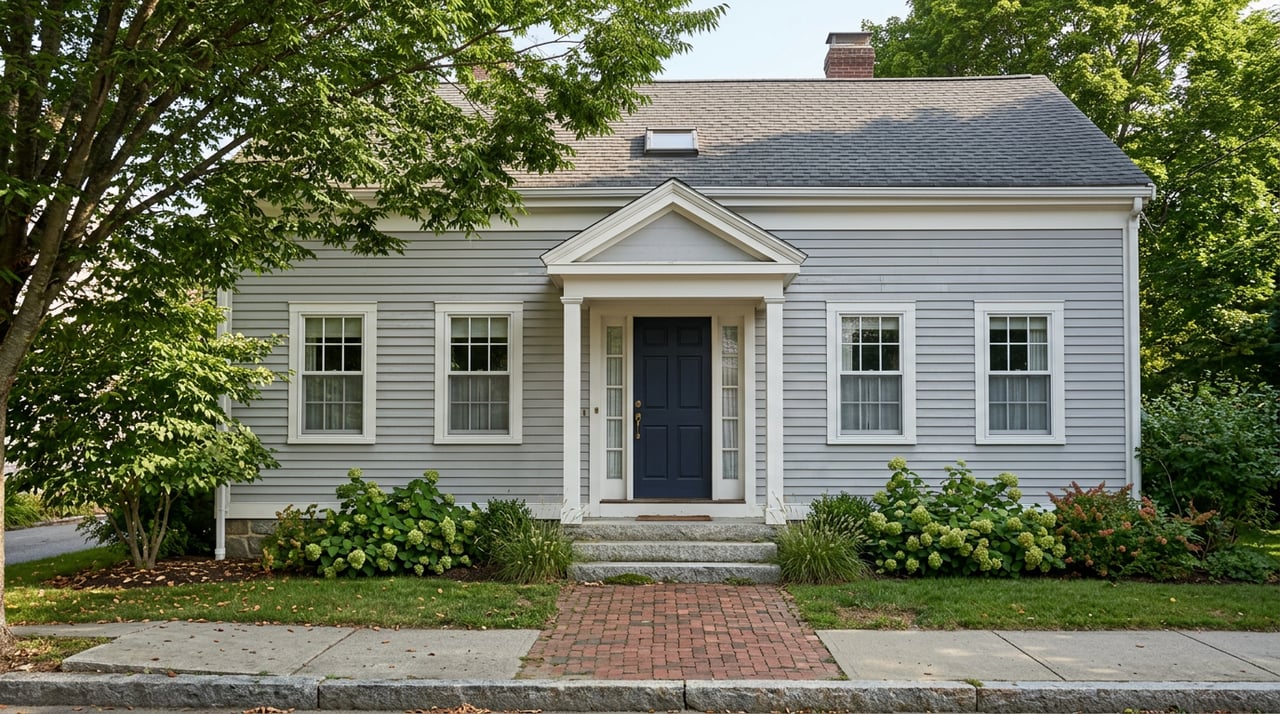
Say you're comparing two Saugus listings priced within a few thousand dollars of each other. One sits a few blocks off Cliftondale Square, a two-and-a-half story Colonial Revival with original moldings and a driveway. The other sits near the Downtown Saugus stretch of Route 1, smaller, plainer, and carrying the exact same price tag. If you're comparing them by price per square foot, the Route 1 listing looks like the weaker deal. Look at what the town just did to its zoning, and it might be the opposite.
That gap isn't a quirk of two random houses. It shows up in the town's own numbers, and it has a specific, traceable cause. The Advocate News reported that Saugus recently rezoned part of its Route 1 corridor to allow more housing density. The market has already started pricing that change into one village more than another.
The number that doesn't match the story
As of August 2026, homes listed for sale across Saugus carried a median price of $654,000, working out to roughly $407 per square foot townwide, with a typical 49 days on market. That's the figure most buyers pull up first, and it's the one they use to decide whether a given village "feels expensive."
Split it by village and the pattern breaks. Downtown Saugus has been posting a median sale price around $748,000, a jump of 14.6% year over year, but at only about $315 per square foot. That's a village charging a higher headline price while charging less for the physical square footage inside the house, which is backwards from how most buyers expect a hot pocket to behave. Meanwhile in Cliftondale, average sale prices over the past year have run closer to $614,000, up somewhere between 6% and 8% year over year, on a stock of two-to-six bedroom Colonial Revivals, cottages, and Craftsman bungalows built mostly between the 1880s and 1920s on compact, sidewalk-lined lots.
Zoom out further and the contrast gets sharper. Zillow's home value index for Saugus, a smoothed measure less sensitive to any single month's sales, shows the town's typical home value up only about 0.5% over the past year. A townwide index barely moving, alongside one village jumping double digits, is not a contradiction. It's a sign that the townwide number is averaging together two very different stories.
Four sales is not a market, but it points at something real
Worth saying plainly: the Downtown Saugus figures come from a genuinely small sample. The most recent published month showed only four homes sold in the area. A median built from four transactions can swing hard on a single well-renovated sale or a single distressed one, so a 14.6% year-over-year jump shouldn't be read as gospel.
What shouldn't be waved away is the mechanism sitting underneath it. Small samples make the exact percentage noisy. They don't explain why the price-per-square-foot relationship flipped in the first place, and that part of the story traces back to a zoning decision, not a lucky sale.
What's actually being priced
In spring 2025, Saugus held a Special Town Meeting to adopt an MBTA Communities Multi-Family Overlay District, the zoning district Massachusetts now requires of every community served by or adjacent to the MBTA. Saugus placed its version on Route 1, split into three subdistricts.
Two named parcels show what that means on the ground. Saugus Ridge, on Rear Broadway, goes from an existing 300 units to a zoned capacity of 309. The mobile home park at 846 Broadway goes from 71 units to a zoned capacity of 96. Neither site is required to build out to that new number. The vote only changed what's legally allowed there.
Downtown Saugus sits directly on or adjacent to that corridor. Cliftondale, built out a century ago around its own square on Lincoln Avenue and Jackson Street, sits apart from it. That single fact does a lot of the explanatory work behind the price-per-square-foot gap. A buyer in Downtown Saugus isn't only paying for bedrooms and finishes. Part of that price is the market pricing in what a Route 1 parcel could become under the new overlay, whether or not any particular seller ever redevelops.
Two villages, two different things being sold
| Recent price signal | What the price is actually built from | |
|---|---|---|
| Saugus, townwide | Median list $654,000, $407 per square foot, 49 days on market as of August 2026 | A blend of every village, muting any single area's movement |
| Downtown Saugus | Median sale $748,000, up 14.6% year over year, $315 per square foot, based on a thin recent sample | Land near a formally rezoned Route 1 corridor with confirmed added multifamily capacity |
| Cliftondale | Average sale near $614,000, up roughly 6-8% year over year | Small, intact single-family homes |
Cliftondale's price tag is a use-value number. The homes there rarely need major work, and the neighborhood's commercial strip still runs on businesses that have anchored Cliftondale Square for decades: Victor's Italian Restaurant, known for chicken parm and meatballs, Banana Splitz for ice cream, and George's Barber Shop, in continuous operation since 1902. None of that trades on future entitlement. It trades on being finished, walkable, and largely unchanged.
Downtown Saugus's price tag increasingly reflects something else. Some portion of what a buyer pays there is optionality, the value of sitting near a corridor the town has now formally zoned for more density, on parcels large enough to matter. That doesn't mean every home near Route 1 is a future teardown. It means the yardstick you use to judge "expensive" has to change depending on which village you're standing in.
What this means before you write an offer
If you're comparing price per square foot across Saugus villages the way you'd compare two competing offers on the same street, stop and ask what's inside that number first.
For a Cliftondale purchase, price per square foot remains a reasonably clean tool. The housing stock is architecturally consistent, so the value sits mostly in the house itself.
For a Downtown Saugus purchase, price per square foot tells only part of the story. Before treating a listing's price as high or low, it's worth checking whether the parcel sits inside or next to one of the three MCMOD subdistricts along Route 1. A property inside that footprint carries a different kind of value than a similar-looking house two blocks outside it, even when the interior finishes look nearly identical.
This distinction matters most for two kinds of buyers. Owner-occupants who want predictable, apples-to-apples pricing are better served comparing within a village rather than against the townwide median. Investors weighing a Saugus purchase for its multifamily potential need the zoning specifics first, since the state's mandate covers zoning capacity, not a construction requirement. Rezoning doesn't guarantee redevelopment. It only removes one obstacle to it.
A few direct answers
Does an upzoned parcel mean the current home gets torn down? Not automatically. The 2025 vote changed what's legally allowed on a lot. It didn't require any owner to build to the new capacity.
How do I check if a specific listing sits inside the overlay? Ask for the parcel's zoning designation before writing an offer. The three MCMOD subdistricts are mapped by parcel, and it's a short check that changes how you should read a listing's price.
Should I discount a high price-per-square-foot listing in Downtown Saugus? Not automatically either. It means you're weighing two things at once, the house and the land's new entitlement, and you should price them separately before deciding the number is too high.
The takeaway
A townwide median tells you almost nothing about what you're actually buying in Saugus right now. The town's villages have started pricing two different things: living space in Cliftondale, and land entitlement in Downtown Saugus. Knowing which one you're paying for is the difference between a fair offer and an overpriced one.
If you're weighing a purchase in Saugus, whether you want the settled character of Cliftondale or you're evaluating a Route 1 parcel for what the new zoning now allows, Kristopher Gergler can walk the specific parcel with you before you write anything. Let's Connect.
This article is general information, not legal, tax or financial advice. Consult a qualified professional about your situation.